Be yourself; Everyone else is already taken.
— Oscar Wilde.
This is the first post on my new blog. I’m just getting this new blog going, so stay tuned for more. Subscribe below to get notified when I post new updates.
Be yourself; Everyone else is already taken.
— Oscar Wilde.
This is the first post on my new blog. I’m just getting this new blog going, so stay tuned for more. Subscribe below to get notified when I post new updates.
My thesis for this portfolio is: when analyzing the book, Into Thin Air by Jon Krakauer, from an archetypal perspective, it becomes clear that it follows the situational archetype of ‘the fall’. This, by extension, warns readers of the consequences of hubris and trying to tame that which humans never had control over: nature.
I have used the mediums of a persuasive essay, a mind map, a blog post, and a website to convey this.
Essay:
I chose to do the persuasive essay because I have experience writing them on character archetypes from when I was in grade nine. My book contains a lot of examples of ‘the fall’ situational archetype and I want to use this essay to focus on how it fits the main character. I also chose to do a persuasive essay instead of an argumentative essay because (1) I find that essays on archetypes tend to get repetitive and (2) I like to use things like appeals to the reader and connotation to get my point across. I even do it in my thesis with the use of the word ‘hubris’ instead of just using ‘pride’. I do understand the reasoning of why using words with a negative connotation can be bad, but the way I see it connotation allows the writer to include their feelings towards the subject without directly stating them.
Link to my essay: https://docs.google.com/document/d/12zcZ6B34QCyoLFCIgcgh23Vad56XZzTWjfWWxpqm9vs/edit?usp=sharing
Mind Map:
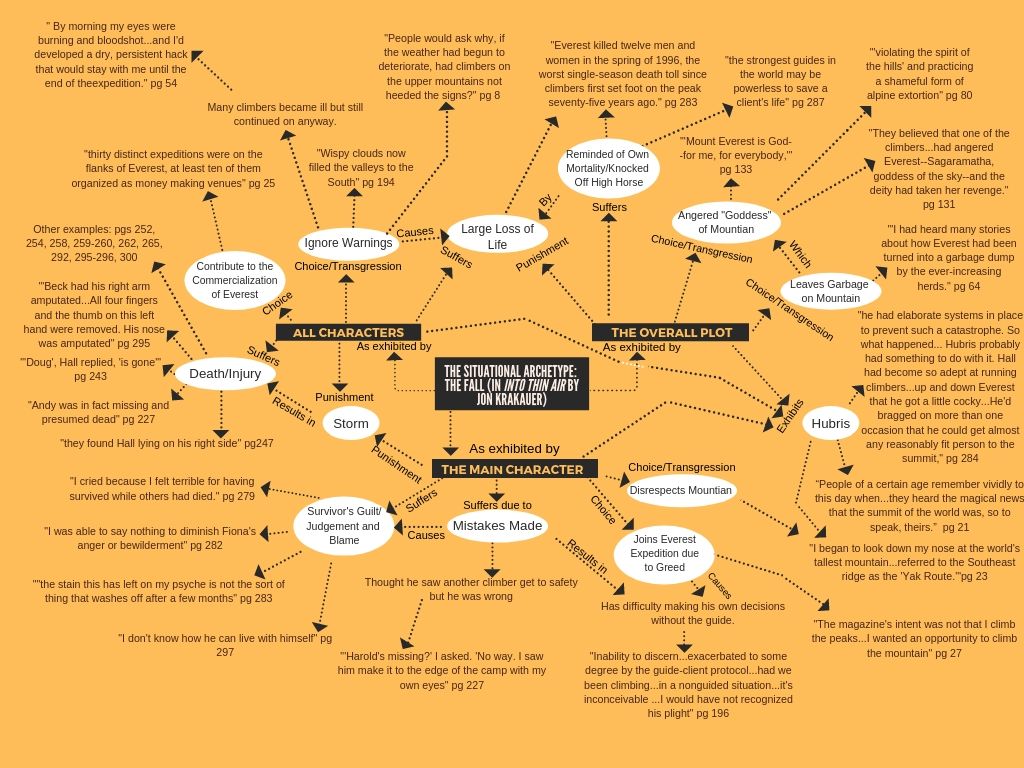
The reason I chose to do a mind map was because it would allow me to simultaneously plan out how I want to explore my thesis in my other mediums while also working on it. Because, like I said above, the archetype I’m basing my thesis on shows up in multiple different ways, the mind map would allow me to explore all of those ways and the proof I have for each before I begin working on my other mediums. It could also possibly allow me to find connections that I previously hadn’t noticed.
Blog Post:
The focus of my blog post is going to be how all of the other characters in Into Thin Air follow ‘the fall’ archetype, not just the main character. The blog post has a similar topic to the essay but because of its informal nature I can include more of my own opinions and hold a kind of ‘discussion’ with my readers. The format of a blog post also allowed me to include pictures, colours, and hyperlinks to enhance my writing and help prove my thesis. This actually ended up turning out pretty different compared to my essay. The informal nature of the blog post meant that I didn’t have to adhere to the stricter formatting of an essay. This allowed me to explore my ideas in more depth as I was able to deviate slightly from the topic.
Link to my blog post: https://eng4uv.video.blog/2019/07/23/the-situational-archetype-the-fall-and-how-it-is-exhibited-by-the-characters-of-into-thin-air/
Website:
The focus of the website is how the overall plot (how humans tried to tame/disrespected nature) follows the same archetype as the rest. I chose to do a website because this topic is going to require some outside research and I wanted my blog and essay to focus mostly on the book. I couldn’t do the podcast because I wanted to include links within the text to where I go my info in case anyone is interested. The links would allow them to immediately find the website instead of them having to scroll down to find the info which may cause some to lose interest. The website will also allow me to have a more informal tone, but not as much as the blog. It would also allow me to list facts and not ‘break’ the rules of that type of medium. When making the website, I found a couple of cool interactive options so I tried to incorporate them into my final product.
Link to my website: https://hermkatl366.wixsite.com/eng4uvculminating
In my opinion, a portfolio lets you fully develop and explore a topic through a variety of mediums. To be honest, I’m actually kind of happy that the final project was a portfolio; my thesis had such a broad range that I didn’t think I would be able to cover everything. I’ve had this problem before where I have so much I want to talk about and explore in an essay but I can’t due to its limitations. This is why I think that a portfolio is so useful. It allows me to fully explore my theses while also showing off my growth as a writer. The different mediums also let me take both a creative and serious look at my topic.

Click here for the synopsis.
The fascinating thing about literature– you see– is how a story and its message can change depending on what perspective you take while reading it. For instance, my first blog post about Into Thin Air (by Jon Krakauer) was an analysis of the story after I had read it from the reader response perspective. In it, I discussed the happenings in the novel by connecting it to my own experiences. However, in my second post I discussed the story from an archetypal perspective with a focus on character archetypes. I will be doing that again in this post, except this time I will be focusing on a situational archetype.
A short review on archetypes for those interested here.
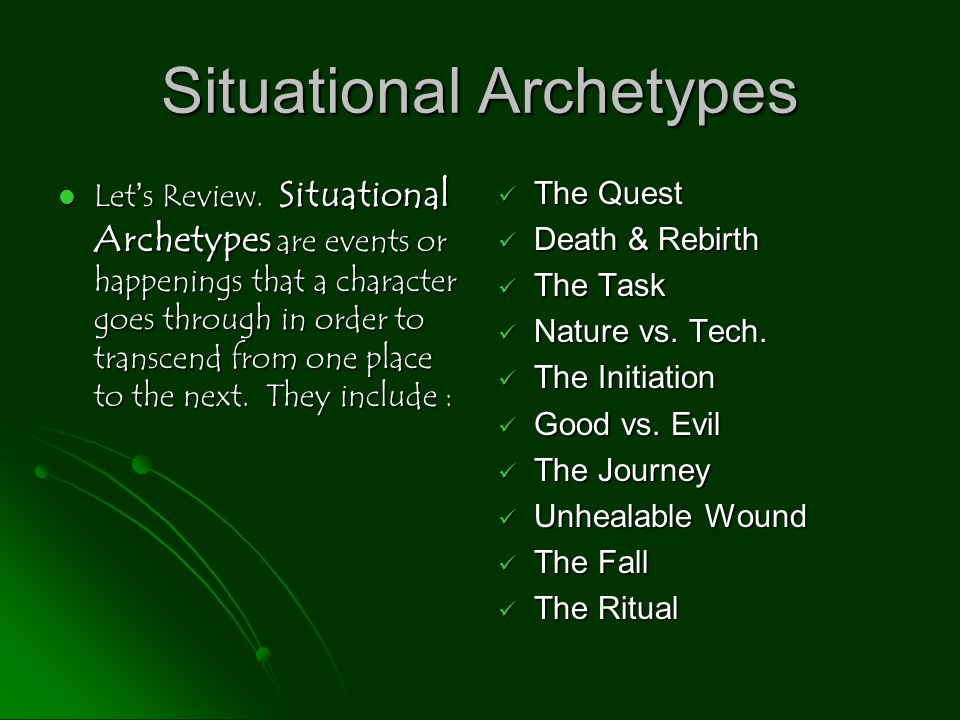
When analyzing the book from an archetypal perspective, it quickly becomes apparent that the situational archetype ‘the fall’ permeates every aspect of this story. (The definition of ‘the fall’ can be found here). For a character, or characters, to experience ‘the fall’, they must pass through three main phases. The first phase is when the character(s) make a choice/transgression; this results in phase two, in which a punishment is handed down to the character(s) due to their choice/transgression; and phase three is the suffering experienced as a result of this punishment which may or may not lead to redemption.

Now that we’ve gotten that out of the way, I can tell you why I think that ‘the fall’ is such an important part of this story. This archetype is exhibited by all of the central characters in this novel, and through the story of their fall, readers are warned about the consequences of hubris and trying to tame something as powerful and unpredictable as nature.
Now, this may seem like a leap in logic on my part, so let’s go through why I think this is what the author was trying to convey. First we need to know what the choice/transgression that these characters made was; there are actually a few so just bear with me.

A pretty common choice in the stories that follow this archetype is excessive shows of hubris. Which (surprise, surprise) also shows up in Into Thin Air. Some lines that demonstrate this are: “Hubris probably had something to do with it. Hall had become so adept at running climbers…up and down Everest that he got a little cocky…He’d bragged on more than one occasion that he could get almost any reasonably fit person to the summit,” (Krakauer 284), “I began to look down my nose at the world’s tallest mountain…referred to the Southeast ridge as the ‘Yak Route.'” (23), “People of a certain age remember vividly to this day when…they heard the magical news that the summit of the world was, so to speak, theirs.” (21). All of these quotes are examples of hubris from many different characters. This isn’t even the main transgression. The choice that all of the characters make, that leads to their fall, is to contribute to the commercialization of Everest. They all chose to be a part of “thirty distinct expeditions…on the flanks of Everest”, specifically, they were members of the “ten of them organized as money-making venues” (8). It is these choices that eventually lead to the characters’ punishment and fall.

Now that we’ve established that the characters of Into Thin Air pass through phase one, we can move on to their punishment. This comes in the form of a massive storm that hits right as they reach the summit. This sudden and drastic change in weather leaves many characters lost and stranded near the top of the mountain, with no way to get to safety but to blindly wander and hope that they make it back; “Because the wind had erased the tracks of the climbers who’d gone down before me, I had difficulty determining the correct route” (199), “by 6:00 P.M., as the storm escalated into a full-scale blizzard with driving snow and winds gusting in excess of 60 knots” (200), “For the next two hours, Beidleman, Groom, the two Sherpas, and the seven clients staggered blindly around in the storm, growing ever more exhausted and hypothermic, hoping to blunder across the camp.” (215). This is phase two, their punishment for the choices they had made. This directly leads them into phase three: their suffering and/or redemption.

Phase three is different for every character, for some it’s death, others it’s debilitating injuries, a couple suffer blame and judgment from society, and a few are redeemed in the form of immortalization on the mountain. There are way too many characters for me to discuss each, so I’ll only give a brief description of a few. If you want to know more, I’d recommend reading the book. Overall “Everest killed twelve men and women” (283) throughout the course of the novel. Some, such as Hall, were immortalized where he lay on the mountain– which is a form of redemption for someone who spent his whole life climbing. Others, such as Beck Weathers, survived but were left with crippling injuries resulting in him having “his right arm amputated…All four fingers and the thumb on his left hand…removed. His nose…amputated” (295). Some people made it out with little injury but instead became “a lightning rod for a great deal of public anger over what had happened on Everest” (300). Every character in the book faces some form of suffering due to their punishment; few are redeemed but don’t live to see it.

As you can see, each character in the book experiences ‘the fall’ archetype at one point or another. Everyone, main character included, passes through all three phases- although some certainly fall harder than others. Through their experiences, readers should learn the deadly ramifications of hubris and thinking that something like nature can be tamed.
Book Reference:
Krakauer, Jon. Into Thin Air. New York, Anchor Books, November 1999. Print.
Website References:
Editing-Queen. “Top 11 Examples of Archetypes in Literature.” ServiceScape, ServiceScape Incorporated, 9 July 2018, www.servicescape.com/blog/top-11-examples-of-archetypes-in-literature.
Woods, Arleen. “Archetypes The Models of Our Entertainment and Philosophies.” SlidePlayer, 2016, slideplayer.com/slide/9954307/.
Picture References:
Baiz, Allison. “Greyscale Above Photography of Man Falling Down.” Pexels. N/a. https://www.pexels.com/photo/grayscale-above-photography-of-man-falling-down-883347/
Cunningham, Caroline. “Into Thin Air: A Personal Account of the Mt. Everest Disaster.” Indigo. N/a. https://www.chapters.indigo.ca/en-ca/books/into-thin-air-a-personal/9780385494786-item.html
Mahatma4711. “Expeditions at Mt. Everest Base Camp, April 2006.” flickr. April 27, 2006. https://www.flickr.com/photos/india-nepal-iran/215827006
MatiasEnElMundo. “Icarus greek myth stock illustration.” iStock. May 11, 2019. https://www.istockphoto.com/ca/vector/icarus-greek-myth-gm957606438-261485120
Ryan, Jerome. “11 Memorial Chortens Next To Gorak Shep For Rob Hall, Doug Hansen, Andy Harris, Yasuko Namba, Bruce Herrod.” Mountains Of Travel Photos. N/a. http://www.mountainsoftravelphotos.com/index.html
N/a. “The free high-resolution photo of mountain, snow, winter, mountain range, weather, season, plateau, blizzard, freezing, atmospheric phenomenon, mountainous landforms, geological phenomenon, winter storm.” pxhere. December 31, 2016. https://pxhere.com/en/photo/155555

Just in case you didn’t read my last post, the book I chose to read was Into Thin Air by Jon Krakauer (click here for the synopsis).
When I began reading this book, I naively assumed that it wouldn’t be hard to assign character archetypes to the characters in the novel. After all, characters in a story tend to fit into nice little boxes that make it easy to determine their archetype. Romeo is pretty obviously a tragic hero, for example. However, I clearly made a mistake in that assumption. Into Thin Air is based on a true story and is written by one of the survivors of the disaster. It is about real events and real people and unfortunately for me, real people don’t fit into archetypes as cleanly as book characters do. Therefore trying to figure out just one archetype for any character is nearly impossible. For instance, at the beginning of the book the main character fits the hero archetype, as shown by how he “wanted an opportunity to climb the mountain” (Krakauer 27)/chose to go on the journey. Then, later in the book, how he saved someone by showing them the way to shelter: “‘Which way to the tents?’ Andy blurted, frantic to reach shelter. I pointed in the direction of camp four, then warned him about the ice below us” (Krakauer 202). It’s pretty clear that at this point, the protagonist is the hero; however, he begins to follow the every man archetype after the storm hits. This is shown by how the mantle of hero is passed on to another character as the protagonist becomes too tired to help anyone. “I asked Hutchinson why, once he learned the whereabouts of the missing climbers, he didn’t… make a second attempt to wake me…’It was so obvious that all of you were completely exhausted” (Krakauer 221). After this point, the main character stops following the hero archetype and instead just tries to get through the situation alive– which I don’t blame him for.
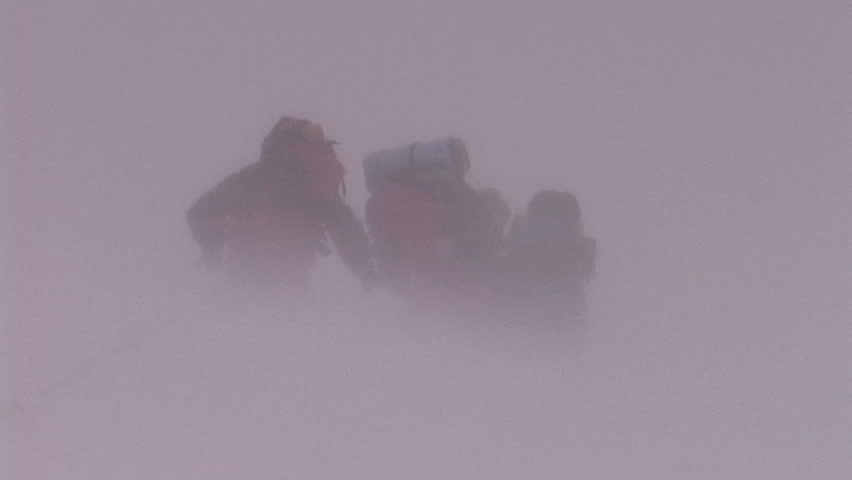
Despite my issues with assigning character archetypes, it was actually surprisingly easy to find the similarities between the main character’s journey and the archetypal hero’s journey. The journey begins with the main character at his home in the U.S. Even when he reaches Everest he is still in a familiar environment due to his past mountaineering experience. However, he soon begins his decent, or accent in this case, into danger as he begins climbing the mountain. The first time the main character is in any real danger, it isn’t even caused by the mountain itself, but rather the beginning of an illness that had “worsened considerably after a second night” (Krakauer 62). This would play a large part in his inability to fulfill the role of a hero later in the novel. The main character’s task in this novel changes about halfway through.

In the first half, his task is to get to the “top of the world, one foot in China and the other in Nepal” (Krakauer 7), but in the second half, his goal changes to essentially “getting down the incline without breaking a leg” (Krakauer 203). Finally, after many more struggles, the main character gets home. The only difference between this and the hero’s journey is that there isn’t really a happy ending. Sure, the main character gets home but his relationship with his wife becomes strained due to him lying to her about the fact that he was going to climb Everest. He also suffers from survivor’s guilt and is haunted by the memories. Moreover, many of the characters– ten, to be exact– that you get to know throughout the book end up dying within one to two chapters of each other. So sadly, there really isn’t some happily ever after; the closest thing we get is a silver lining.
Overall, I really enjoyed reading this book. Admittedly, it was slightly boring in the beginning but once the climb began it was a pretty interesting and nerve-wracking read.
Book Reference
Krakauer, Jon. Into Thin Air. New York, Anchor Books, November 1999. Print.
Picture Reference
CNN. “If you’re dreaming of climbing Mount Everest, this is what it takes”. CNN Travel. June 2, 2019. Retrieved from https://www.cnn.com/2019/05/28/asia/how-to-climb-mount-everest/index.html
Cunningham, Caroline. “Into Thin Air: A Personal Account of the Mt. Everest Disaster”. Indigo. N/a. Retrieved from https://www.chapters.indigo.ca/en-ca/books/into-thin-air-a-personal/9780385494786-item.html
Ray, Rick. “Climbers fight brutal storm on Mt. Everest”. shutterstock.com. N/a. Retrieved from https://www.shutterstock.com/video/clip-1546645-climbers-fight-brutal-storm-on-mt-everest
The book that I chose to read is Into Thin Air by Jon Krakauer (click here for the synopsis).
The first thing I noticed, before I even started the book, was the “dedicated to” page. I know that most people tend to ignore them but I like to read it since it gives me a good initial understanding of the author and book. Anyways, the reason it caught my attention was the line: “in memory of Andy Harris, Doug Hansen, Rob Hall, Yasuko Namba, Scott Fisher, Ngawang Topche Sherpa, Chen Yu-Nan, Bruce Herrod, Lopsang Jangbu Sherpa, and Anatoli Boukreev” (Krakauer XI). It’s pretty long, right? I found it odd but I chose to ignore it. It wasn’t until the author mentioned “Anatoli Bourkreev, a Russian climbing guide” (Krakauer 8) that I realized that the “in memory” section was for the people who died during the Mount Everest climb. The realization gave me chills.
Another freaky thing that the author does throughout the story is list his current height from sea level. Due to the fact that I know that the storm hits once he reaches the summit, it’s almost like a morbid countdown. “11,300 feet…16,000 feet…16,200 feet” (Krakauer 44-54) all the way up until he reaches 29,028 feet: the peak.
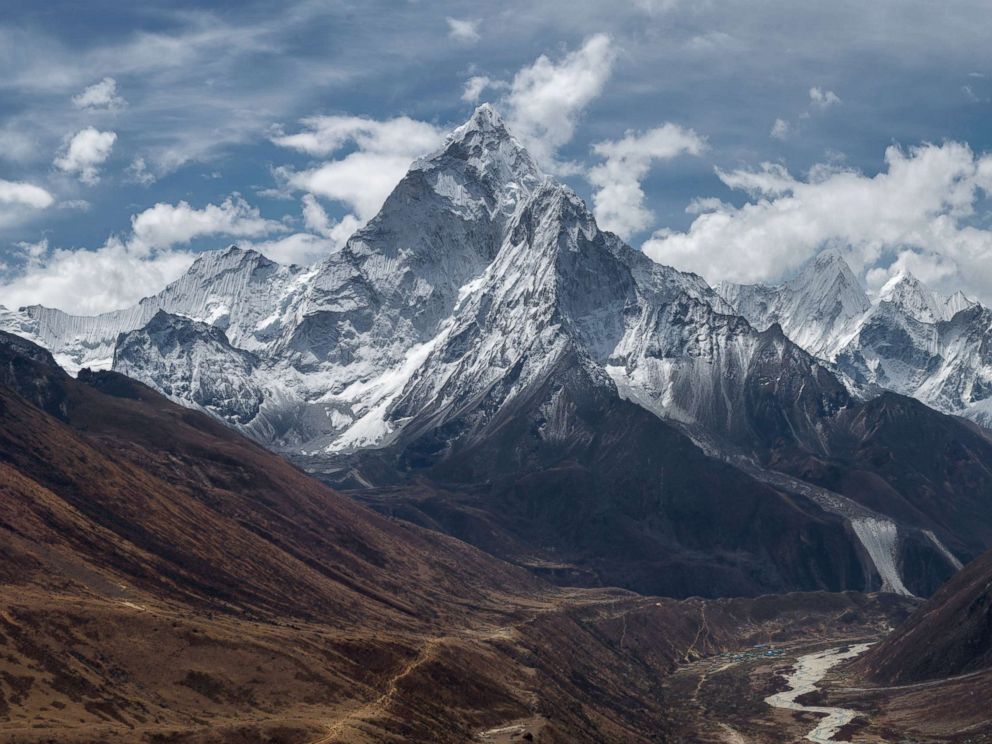
This countdown, or rather count up, gave me flashbacks to my visit to the Rocky Mountains two years ago. Now, the Rockies are not nearly as tall as Everest (only about 12,293 feet at the highest peak (Oishimaya)), and I didn’t even come close to the summit, but the sheer height is still noticeable. This book made me remember one particular event where I was riding a Gondola up on of the mountains, and an automatic voice would occasionally tell me how high I was. Everytime it would say a new height I would look down to see how far from the ground I was. This experience gives me a pretty good (although not perfect) visual of the author’s climb. Sometimes it is difficult to imagine just how far up a few thousand feet really is, so the fact that I was able to do this gave me a better understanding of how much danger the author was in throughout the whole book. The feeling of terror and helplessness it inspires almost makes me wish that I didn’t know how high up the author was at any given moment.
The author makes a few interesting choices while writing the story. For example, each chapter begins with a quote from another piece of writing about Everest, including multiple quotes from “Thomas F. Hornbein Everest: The West Ridge” (Krakauer 15), a piece of writing by a mountaineer who had previously climbed Everest. The author also sometimes tells the story of what happened to previous climbers such as Enmund Hillary, the first man to climb Everest. Both of these choices are so interesting because a lot of the other climbers that Krakauer tells the stories of actually end up dying on the mountain. It really hits home how dangerous climbing Everest actually is, even without a massive storm making the trek hazardous.
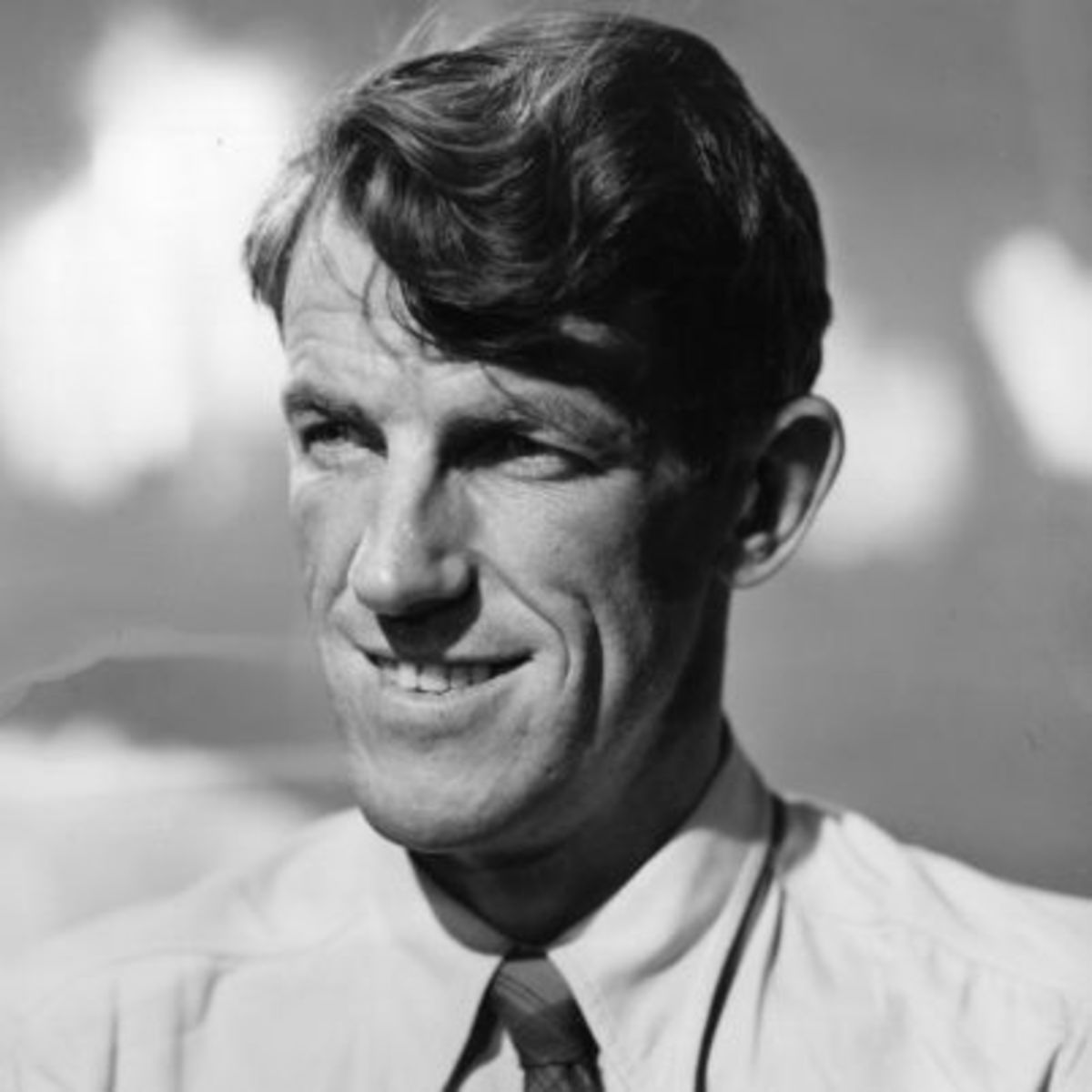
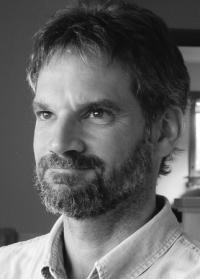
Left: Edmund Hillary, Right: Jon Krakauer
Overall, I think that this is a really interesting book and I’m excited to read more.
Book Reference:
Krakauer, Jon. Into Thin Air. New York, Anchor Books, November 1999. Print.
Picture Reference:
Biography.com. “Edmund Hillary Biography”. Biography.com. N/a. Retrieved from https://www.biography.com/athlete/edmund-hillary
Cunningham, Caroline. “Into Thin Air: A Personal Account of the Mt. Everest Disaster”. Indigo. N/a. Retrieved from https://www.chapters.indigo.ca/en-ca/books/into-thin-air-a-personal/9780385494786-item.html
N/a. “An undated stock photo of Mount Everest”. abcNews. 2019. Retrieved from https://abcnews.go.com/International/china-closes-mount-everest-base-camp-tourists-garbage/story?id=61144089
Penguin Random House. “Jon Krakauer”. jonkrakauer.com. N/a. Retrieved from http://www.jonkrakauer.com/
Website Reference:
Nag, Oishimaya. worlatlas.com. WorldAtlas. June 11, 2019. https://www.worldatlas.com/articles/the-10-tallest-peaks-in-alberta-canada.html

I really enjoyed listening to this podcast, the topic was interesting and the ‘story’ was told in a way that kept me invested in what was happening. I have always been interested in crime shows like Making a Murderer and the like, and I have even listened to other podcasts about crime so it’s no surprise that the topic of this podcast had me interested. However, the way the story is told and the pacing is just as important. Although it can be somewhat annoying sometimes, the fact that no real questions were answered throughout the duration of the podcast makes me want to listen to more. Furthermore, the question of “who is lying” that you’re left with at the end of the podcast incites thought as you question what you heard and try to look for answers.

I also think that the idea of presenting investigative journalism in this format, while not unique to Serial, is a good one. Although I love to read, when I imagine reading this podcast as a book or something I already start to feel bored. After all, most of this podcast was just the narrator listing the facts of the case. Sure there were interviews, but they weren’t exactly the most fascinating conversations known to man. In my opinion, the reason the podcast was interesting is because of the audio aspect of it. The added music, and the tone of the people talking, helped add atmosphere. Moreover, the fact that there was audio lets listeners connect with and feel empathy towards the people involved in the case. Although I hate to admit it, if I hadn’t heard

how Adnan Syed spoke I probably wouldn’t have questioned his guilt as much. The underlying sadness in his voice made him seem more human than if he was just words on paper, and it made it easier to empathize with him. This is also why I would prefer to listen to podcasts like this instead of reading them as text. Although I don’t like audio books, something like this that is mostly fact based is much more interesting as a podcast for the same reasons I stated above. The only real problem I find with podcasts like this is that it is easy to miss information. With books it is pretty easy to find what you missed and read it again but with podcasts you have to use the scroll at the top, which makes it pretty easy to miss what you’re looking for.
Although I don’t really know enough about the victim’s family to make a proper guess about how they would feel, I know that if this had happened to one of the members of my family I would be pretty pissed off. Not only is someone digging up the past, they are also questioning the victim.

Were they actually a bad person? Maybe that was why they were killed.
I know that the narrator of the podcast is trying to figure out if an innocent man was put into jail, but it is still disrespectful to the dead. Moreover, as shown by the ad at the beginning, the people running the podcast are making money from this. So not only are they digging up the past, but they are also making money off of the victim’s murder. So yes, I would be angry that these people are broadcasting what had happened to the world and benefiting from it.
I think that opening the podcast with a discussion on the fragility of memory was a good choice. It makes listeners question themselves as well as the memory of the people involved in the crime. It also helps people understand Adnan Syed’s reasoning for why he can’t remember what happened on the day the crime took place. I know that if you asked me what I did two days ago I would only be able to give vague answers at best, and asking me what I did six weeks ago is a lost cause. The issue of memory recall is prevalent throughout this podcast. Adnan can’t remember what he did the day of the murder but Jay seems to remember it quite clearly. Then there is Asia who can clearly remember talking to Adnan years ago.
What I am concerned about is not how much each person remembers, they each have their own reasonable justification about why they can or can’t remember what happened. I am concerned about what they remember. I took an Introduction to Sociology, Anthropology, and Psychology class last semester and one of the things we talked about is memory recall. There are some people who are able to remember an event from years ago, but the problem is that details change over time. I won’t bore you with the reasons behind why, but if you’re interested click here. The important part is: while most people can remember large details, small details tend to change each time you recall the memory. So I am most concerned about the possibility that someone got a detail wrong, which might change the whole case.
References
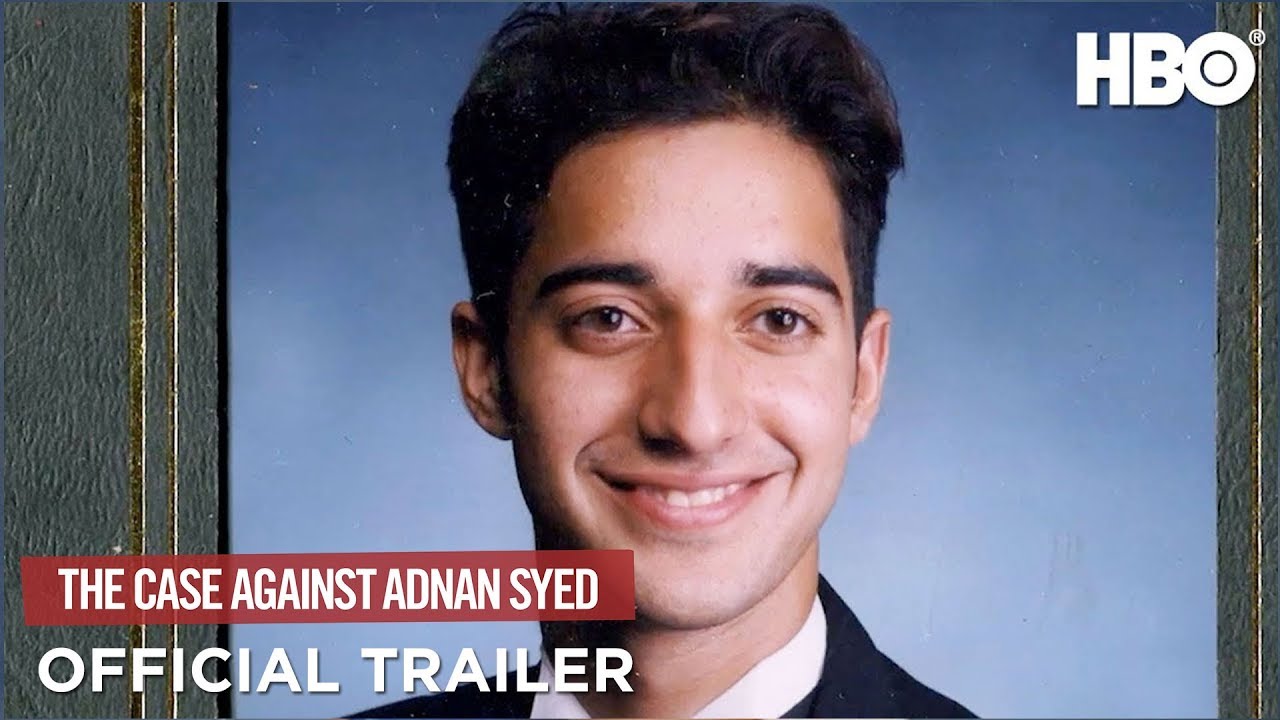
HBO. “HBO Releases Trailer For ‘The Case Against Adnan Syed’ DocumentaryHBO”. CBS Baltimore. February 5, 2019. Retrieved from https://baltimore.cbslocal.com/2019/02/05/hbo-releases-trailer-for-the-case-against-adnan-syed/
HBO. “The Case Against Adnan Syed”. Crave. 2019. Retrieved from https://www.crave.ca/hbo#/series/44673
Hellberg, Christer. “Serial podcast: The solution to the Hae Min Lee murder case”. WordPress. January 9, 2016. Retrieved from https://sharedtracks.wordpress.com/2016/01/09/serial-podcast-the-solution-to-the-hae-min-lee-murder-case/
Hendicott, James. ” Serial’s Sarah Koenig on her podcast’s message: ‘don’t judge before you try to understand’”. NME. January 11, 2016. Retrieved from https://www.nme.com/news/serial-s-sarah-koenig-on-her-podcast-s-message-don-867854
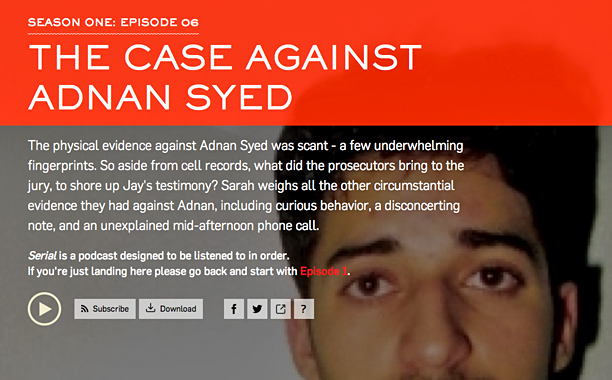
Koenig, Sarah. “SEASON ONE: EPISODE 06 The Case Against Adnan Syed”. Serial. 2014. Retrieved from https://serialpodcast.org/season-one/6/the-case-against-adnan-syed
Rajani, Deepica. “Adnan Syed”. iNews. April 2, 2019. Retrieved from https://inews.co.uk/culture/television/adan-syed-case-prison-now-hae-min-lee-murder-latest/

Should Grade 12 University level English be a requirement for entry into all university programs? I think the answer is yes, they should.
English is a very important and necessary skill in everyday life. You may never need to know how to find the equation of a sinusoidal function beyond high school, but you will need to know proper grammar and how to convey a thought through writing. No matter what your chosen career path may be, you will need to use the skills you learn in English class. So I ask you this: why shouldn’t Grade 12 University English be a requirement?

I am aware that not every career will have a person writing persuasive essays or short stories but that doesn’t mean that they will never use what they learned in English class. They’ll need to know proper grammar and how to write in a formal tone when making a cover letter for their resume, and how to communicate through writing when composing emails. They’ll need to use their reading comprehension skills when examining documents, contracts, and written instructions. Just because a person will never use the skills directly taught to them while they were taking English, doesn’t mean they will never use the skills they picked up while in that class.
Most university programs require that, on top of taking the necessary courses, they must also be university level (when applicable). For instance, in order to qualify for most accounting courses, you have to have two grade 12 university level math credits. This makes sense, right? In order to join something at a certain level, you must qualify for that level. Take a high school sports team for example. In order to join that team, you must already be at a certain skill level in order to qualify during tryouts. In order to reach that skill level, you may have had to join the team the previous year or practice outside of school, so why should university be any different?

Now, I understand that some people may not have the best English skills, but may be geniuses at something else. So should these people be rejected from a university’s program because they had to take college or workplace level English? I still think they should. There are ways that, if a person is motivated enough, they can pass a university English class. They can get a tutor or extra help from a teacher, or they could ask for less hours at their job in order to make more time for their English homework. If a person really wants to get into a university program, they can find ways to boost their English mark. Granted, they may not achieve the highest mark, and it may lower their average, but then they’ll just have to work harder at what they excel at to negate it. Or they could take an extra easy course in order to get a high mark and negate their English mark that way.
What I’m saying is that if a person wishes to take a university course, they need to be able to achieve work at a university level. If their chosen course requires a university level credit in a course that they have difficulty in, whether it is English or not, then there are steps that they can take in order to pass that class and still keep their average high enough for their preferred program. And since English teaches such important skills that will be used during university as well as throughout a person’s life, University level English should be a requirement for entry into all university level programs.
References
Converse Collage. “Classroom”. Flickr. April 27, 2011. Retrieved from https://www.flickr.com/photos/conversecollege/9070175180/in/photolist-ePv25G-qASYrM-nKTiAH-4w5NVm-bkD56m-oYKGYV-abCwhn-4fuGVH-553hAz-5C7S4N-553gup-5FQ2gG-9irAFi-786B3r-77hrfr-o92hy1-6bK3Wv-2xKTW-4yJyHS-e8qNNY-6Wm4Sc-8xVKeF-92kdTE-8xYP2d-2xKU5-fUM7mV-6Wq3Ao-dq3Cx6-DXCYA-b4neBx-aZBjxF-eq1Mfo-7HCBte-nr49mx-6tdvov-5K11UM-nKUehD-2zJLxq-c3Y4rh-4DUhZU-7PC4pD-6m6ker-7HGwZ5-2TX13W-9efhfx-dyMHYi-8JAQMN-4tbxLm-qYrjF8-hr6vos
N/a, Dominick. “Livingston vs Millburn Girls Soccer 10/21/10”. Flickr. October 21, 2010. Retrieved from https://www.flickr.com/photos/domdp/5103877384/in/photolist-8M1GVW-gDwhgP-oUtaNy-9qdas6-fJx9q1-aAdFNv-ZM7X3o-p4TuXA-6TtymY-6TtjUd-fJwYwG-6TthAs-fLFu1r-6TpBTx-gCMtbS-p4Tiep-9qfXbu-H9nLa-pm7ey8-4Hhnae-dqrJ93-anurkf-82UrwH-gEvN7C-pFsYLB-QKHd8k-gDMC5P-djKjxQ-gCK6E9-anrAAF-apGcaN-gEB4c6-mkjXcP-fJx5tY-mkkEwa-9Fmxxx-ppihJq-fJfrge-anupEC-gEzJse-2MJYrs-6TtyFA-gCFp8W-fJfusv-fJfuZe-YM9FnY-6TphaZ-6TthXQ-9RKkzF-bANWHp
Yu, Feng. “Dictionary definition of the word english”. Shutter Stock. N/a. Retrieved from https://www.shutterstock.com/image-photo/dictionary-definition-word-english-154277183?src=4arow14phpkDgjC6hVYuZQ-1-1
This is an example post, originally published as part of Blogging University. Enroll in one of our ten programs, and start your blog right.
You’re going to publish a post today. Don’t worry about how your blog looks. Don’t worry if you haven’t given it a name yet, or you’re feeling overwhelmed. Just click the “New Post” button, and tell us why you’re here.
Why do this?
The post can be short or long, a personal intro to your life or a bloggy mission statement, a manifesto for the future or a simple outline of your the types of things you hope to publish.
To help you get started, here are a few questions:
You’re not locked into any of this; one of the wonderful things about blogs is how they constantly evolve as we learn, grow, and interact with one another — but it’s good to know where and why you started, and articulating your goals may just give you a few other post ideas.
Can’t think how to get started? Just write the first thing that pops into your head. Anne Lamott, author of a book on writing we love, says that you need to give yourself permission to write a “crappy first draft”. Anne makes a great point — just start writing, and worry about editing it later.
When you’re ready to publish, give your post three to five tags that describe your blog’s focus — writing, photography, fiction, parenting, food, cars, movies, sports, whatever. These tags will help others who care about your topics find you in the Reader. Make sure one of the tags is “zerotohero,” so other new bloggers can find you, too.

 Katlin's Blog